
You Can't GPS Your Way to PBL: Why Backward Mapping Is the Real Teacher Shortcut
Annalies Corbin, PAST Foundation, Columbus, Ohio, USA.
In this first installment of our Backmap Series, we sit down with the core philosophy of educational design. As we gear up for another school year, we’re asking a bold question: What if we stopped planning for what we are doing on Tuesday and started planning for who our students will become by next June?
Together, we explore how to move beyond the "Activity Trap" and into a space of deep, intentional learning.
The Great Planning Paradox
Imagine you’re setting out on a cross-country road trip. You hop in the car, turn the key, and start driving east. You have a trunk full of great snacks (the "activities"), a playlist of high-energy songs (the "engagement"), and plenty of fuel. But you haven't put a destination into your GPS. You’re making great time, but you have no idea where you’re going.
In the world of education, we do this all the time. We find a fantastic solar oven project on Pinterest or a "cool" robotics kit, and we build our week around it. We focus on the doing. But at the end of the unit, we look back and wonder: Did they actually master the standards? Did they solve a real-world problem, or did they just follow directions to build a box?
You can't GPS your way to high-quality Problem-Based Learning (PBL) if you don't know the destination first.
That’s where the PAST Foundation Backmap comes in. It’s not just a template; it’s a mindset shift. It’s the "backup" support tool that ensures every minute of classroom time is an investment in a larger, meaningful outcome.
What is the Backmap?
The Backmap is a flexible, multi-day/week planning tool designed to help you reverse-engineer your curriculum. Instead of starting with "Day 1: Intro to Physics," you start at the very end of the quarter (or the term of the project you are planning). You start with the Problem or the Issue that students will be asked to solve.
By anchoring your planning in a real-world challenge, you create a natural "pull" for learning. Students aren't learning math because it’s on page 42; they’re learning math because they need to calculate the structural integrity of the bridge they are designing for their local community.
Activating the Five "Hacking School" Strategies
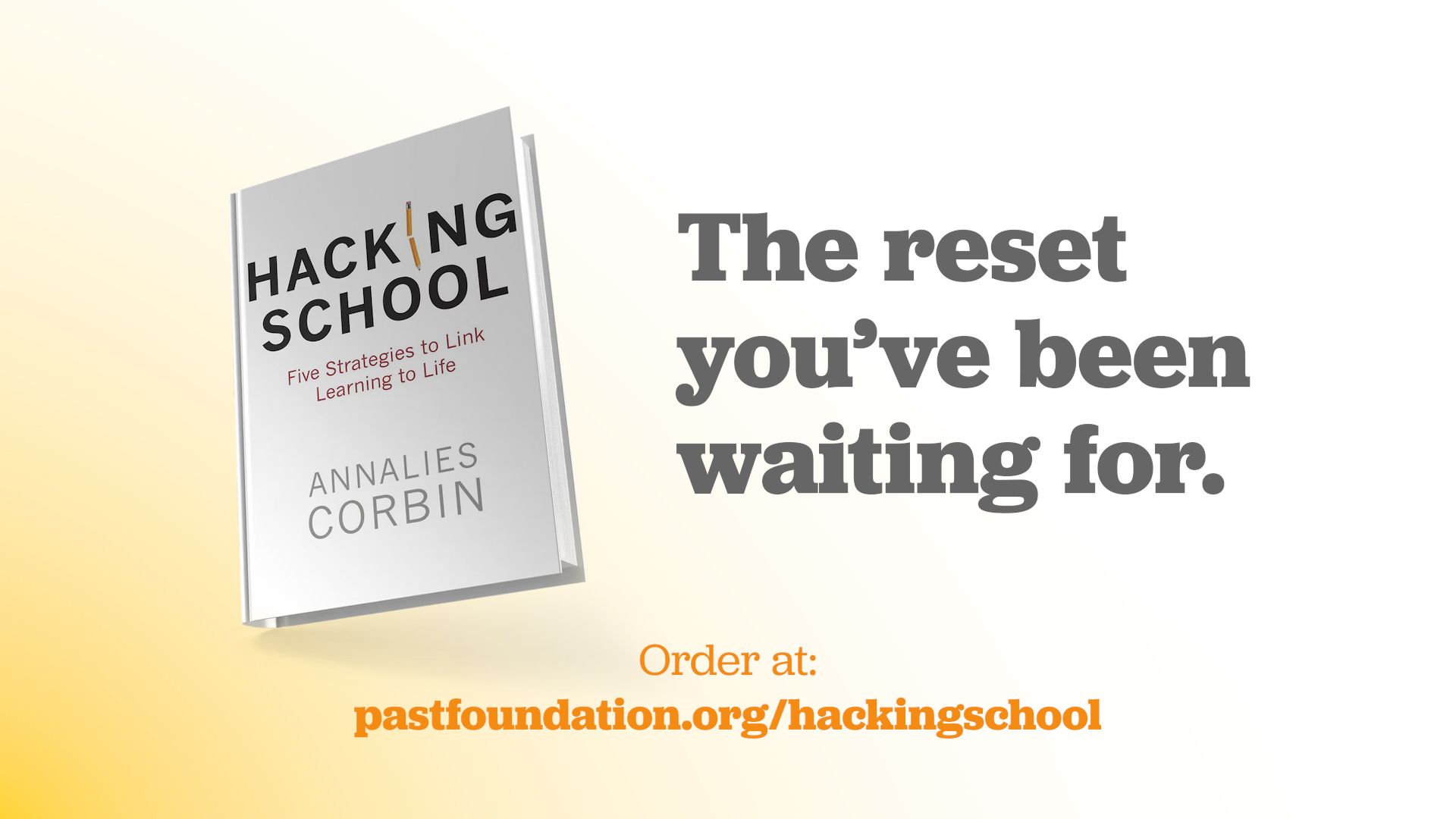
At the PAST Foundation, our work is rooted in the five strategies found in Hacking School: Five Strategies to Link Learning to Life. The Backmap is the engine that brings these strategies to life in your classroom.
1. Student Agency: Giving Kids the Map
When you use a Backmap, you can share the "destination" with your students on day one. When students know what the final challenge is, they can begin to take ownership of their learning path. They start asking for the tools and knowledge they need to succeed. That is the heart of Student Agency: moving from being a passenger in the classroom to being the driver.
2. Culturally Relevant Teaching: Starting with the "Why"
Backward mapping forces us to ask: Why does this matter to these specific students in this specific community? By starting your plan with a local problem: whether it’s food insecurity in your neighborhood or water quality in a local creek: you ensure your teaching is Culturally Relevant. You aren't just teaching "science"; you’re teaching their science.
3. Mastery-Based Learning: Defining the Evidence
The Backmap requires you to define what success looks like before you plan the lessons. What evidence will students produce to show they’ve mastered the standard? Because the Backmap is flexible, it allows for Mastery-Based Learning. If a student hasn't mastered a concept by Wednesday, the "route" can change without losing sight of the destination.
4. Transdisciplinary Learning: Breaking the Silos
The most complex problems in the world aren't solved by one subject alone. The Backmap allows you to layer multiple standards: Math, ELA, Science, Social Studies: into one cohesive project. It’s the ultimate tool for Transdisciplinary Learning, showing students that knowledge is a connected ecosystem, not a series of isolated folders.
5. Problem-Based Learning: The Core Engine
Finally, the Backmap is the foundation of Problem-Based Learning (PBL). It ensures that the "problem" isn't just an add-on at the end of the unit. Instead, the problem is the unit. Every lesson, every lab, and every reading assignment is a step toward uncovering the solution.
From "Coverage" to "Uncovering"
We often hear teachers talk about the pressure of "covering the content." It feels like a race against a clock that’s always winning. But when we focus on coverage, we often sacrifice depth. We skim the surface, and by the time the test is over, the knowledge has evaporated.
The Backmap flips the script. We move from "covering" to "uncovering."
When you map backward from a complex problem, you create a journey of discovery. You aren't just delivering information; you’re setting the stage for students to uncover the big ideas of your discipline. It’s the difference between showing a student a picture of a forest and walking them through the trees.
How it Works: The Route is Flexible
Think of the Backmap like a modern GPS. If there’s a "roadblock": say, a concept that the whole class is struggling with: the Backmap allows you to "recalculate." You know exactly where you need to end up, so you can shift your daily activities to meet your students where they are, without losing the rigor of the final goal.
It provides the structure educators need to feel confident and the flexibility students need to feel empowered.
What’s Next?
We know that seeing the philosophy is one thing, but seeing it in action is another. How do you actually use a Backmap for a 2nd-grade unit on habitats versus a 10th-grade unit on renewable energy?
In Part 2 of this series, we’re going to get tactical. We’ll provide concrete examples of the Backmap in action across Elementary, Middle, and High School levels, showing you exactly how to fill in the blanks and launch your most successful school year yet.
Are you ready to stop driving and start leading?
Keep an eye out for the next installment. In the meantime, start thinking: If your students could solve one problem in your community this year, what would it be?
That’s your destination. Now, let’s build the map.
The Backmap tool is a signature resource of the PAST Foundation. To learn more about our coaching, online courses, and how we help schools redesign teaching and learning, visit us at pastfoundation.org
Downloadble Backmap tool link: https://drive.google.com/file/d/1nTgmK7g7s8FdztMMUEjVCkN3paZ3d7vP/view?usp=share_link



Responses