
The Evidence Check Protocol: How to Turn Midterm Feedback into Real Revision
Recap: The midterm is a checkpoint, not a verdict
Tuesday’s idea was simple: a midterm should tell us what to do next, not just what happened.
A report card summarizes performance. An evidence check helps a learner and teacher interpret evidence, identify a next move, and create a genuine opportunity to improve. That distinction matters because formative assessment only becomes formative when the evidence changes what teachers or students do next (Black & Wiliam, 1998).
The goal is not to grade more. It is to notice better.
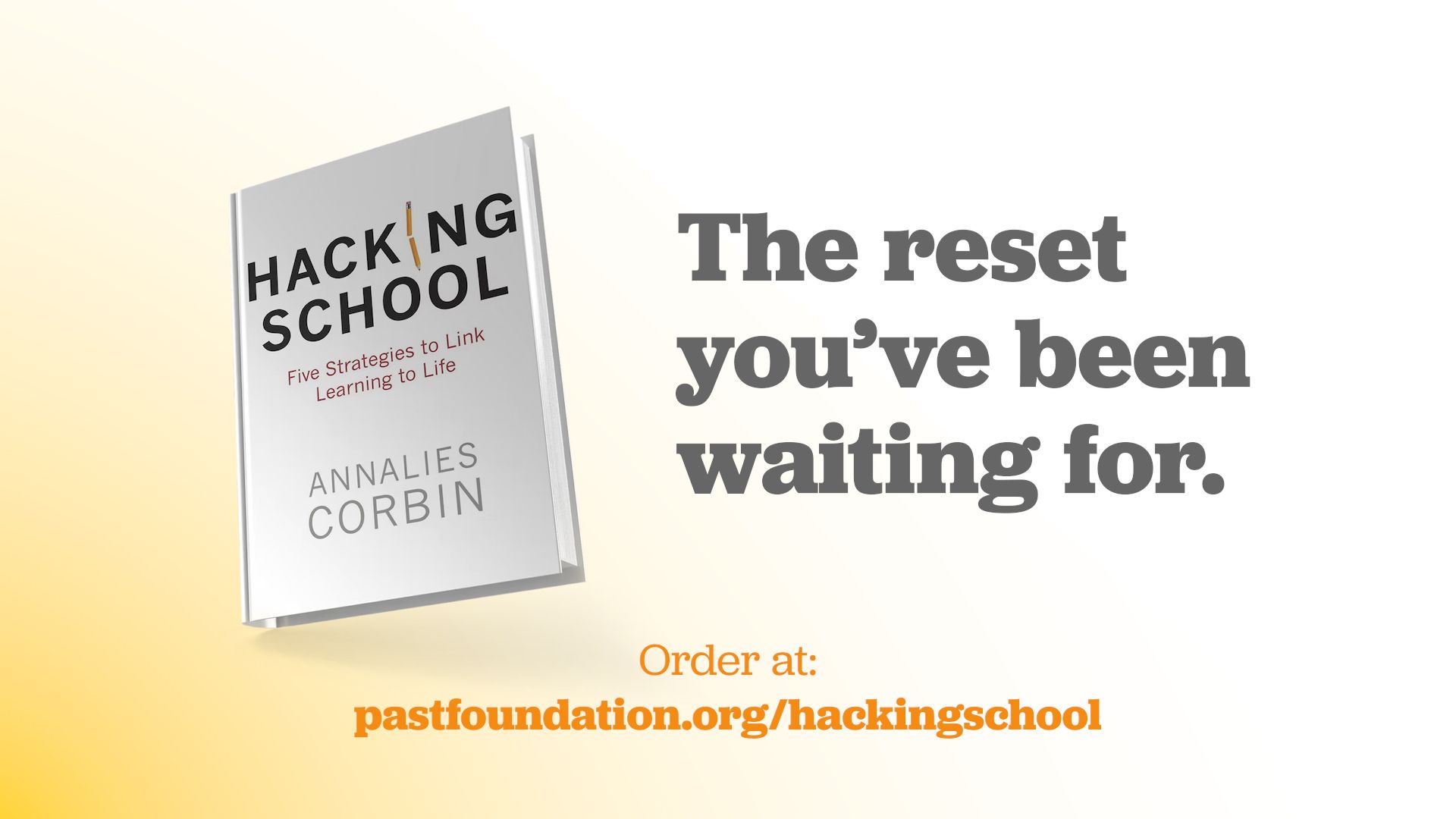
A useful evidence check brings together several commitments from Hacking School: Mastery-Based Learning, Student Agency, Culturally Relevant Teaching and Learning, Transdisciplinary Learning, and Problem-Based Learning. It also follows the logic of design thinking:
Empathize → Define → Ideate → Prototype → Test
In this context:
-
Empathize: Understand the learner’s experience, strengths, questions, and barriers.
-
Define: Identify the specific learning gap or unfinished thinking.
-
Ideate: Consider multiple ways to address it.
-
Prototype: Try a revision, new strategy, explanation, or solution.
-
Test: Use new evidence to determine what improved and what still needs attention.
What would change if every student left a midterm conference with a clear next step and the time, tools, and permission to take it?
The Evidence Check Protocol
This protocol is designed for one class period, one team meeting, or one short conference cycle. It uses a small sample of evidence rather than asking teachers to regrade everything.
Step 1: Choose the essential learning
Begin with two or three essential outcomes. These should describe what students need to understand or be able to do: not every standard addressed since the start of the term.
For example:
-
Explain how a character’s choices influence a story’s development.
-
Use proportional reasoning to solve and explain real-world problems.
-
Develop a claim supported by relevant evidence.
-
Design and test a solution to a defined community problem.
This is the Mastery-Based Learning move: define what proficiency looks like before interpreting the score. Mastery learning depends on clear objectives, feedback, corrective instruction, and another opportunity to demonstrate understanding (Bloom, 1968).
Step 2: Review a small, purposeful evidence set
Gather no more than three pieces of evidence per student:
-
One recent task or assessment.
-
One work sample that shows process, explanation, or application.
-
One student reflection, conference note, or observation.
Avoid reviewing every assignment. The purpose is not to create a complete archive. The purpose is to identify a useful pattern.
Sort the evidence into three categories:
-
Secure: The student demonstrates the learning independently and consistently.
-
Developing: The student shows partial understanding, inconsistent application, or a strategy that needs strengthening.
-
Not yet visible: The evidence does not yet show the intended learning.
“Not yet visible” is deliberately different from “cannot.” The first describes the evidence in front of us. The second makes a claim about a student.
Step 3: Ask what the evidence is actually telling you
Use these questions:
-
What can the student already do?
-
Where does the thinking become unclear, incomplete, or inaccurate?
-
Is the issue conceptual understanding, vocabulary, strategy, confidence, access, or task design?
-
What strengths, experiences, languages, interests, or community knowledge could help the student approach this differently?
-
What evidence would convince us that the learning has improved?
This is where Culturally Relevant Teaching and Learning matters. Students do not arrive empty-handed. Families and communities hold knowledge, language practices, problem-solving strategies, and expertise that can become resources for learning (Ladson-Billings, 1995; Moll et al., 1992).
A student who struggles to write a formal explanation may be able to explain a process orally, through a diagram, or by connecting it to a familiar experience. Those modes are not substitutes for academic growth; they can be bridges toward it.
Step 4: Give feedback that points to action
Feedback should answer three questions:
-
Where am I going? What is the learning target?
-
Where am I now? What does my work currently show?
-
Where do I go next? What specific change should I make?
This is more useful than “Good job,” “Needs detail,” or a page covered in corrections. Feedback has greater instructional value when it focuses on the task, the process, and the learner’s next move rather than on personal qualities (Hattie & Timperley, 2007).
Try language such as:
-
“Your claim is clear. Now add one piece of evidence and explain how it supports the claim.”
-
“Your method works for the first problem. Test it with a new example and look for where the pattern changes.”
-
“You identified the important idea in the text. Next, explain why that idea matters.”
-
“Your design responds to the user’s need. Now test it with someone who was not part of your design team.”
Step 5: Build the revision loop
Feedback without revision is advice. Revision turns feedback into learning.
Use this five-part routine:
-
Notice: The student identifies one strength and one area for growth.
-
Interpret: The student explains what the feedback means.
-
Plan: The student chooses one revision strategy.
-
Revise: The student changes the work.
-
Reflect: The student compares the original and revised versions.
The revision does not always need to be a full redo. Depending on the subject, it might be:
-
Reworking two problems and explaining the correction.
-
Revising one paragraph.
-
Recording a clearer oral explanation.
-
Annotating a diagram.
-
Rebuilding a prototype.
-
Repeating an investigation with one variable changed.
-
Creating a new example that demonstrates transfer.
Student agency grows when students have meaningful choices and are expected to use evidence to guide those choices. The teacher still provides structure; the learner gains ownership of the next move.
Step 6: Use the evidence to change instruction
After reviewing the class evidence, identify one instructional response:
-
Reteach a shared misconception.
-
Create a short workshop for a specific strategy.
-
Offer two pathways to practice.
-
Pair students for structured peer explanation.
-
Add a model, visual, vocabulary support, or worked example.
-
Extend students who are ready to apply the skill in a new context.
This is also a transdisciplinary opportunity. A shared skill such as evaluating evidence, communicating reasoning, or designing for a user can travel across subjects. A science teacher, English teacher, and social studies teacher may use different content while reinforcing the same underlying practice.
Developmental applications
Elementary: Make the thinking visible
In an elementary classroom, use a simple “show me what changed” folder or conference page.
A third-grade student’s midterm math work shows accurate addition and subtraction but confusion when solving multi-step word problems. Rather than assigning another packet, the teacher asks the student to:
-
Circle the question in a problem.
-
Draw or model the information.
-
Explain which operation fits and why.
-
Solve a new problem with a partner.
-
Record one sentence: “The strategy that helped me was…”
The teacher might invite the student to use a familiar context: sharing snacks, planning a class garden, or organizing materials, to make the problem meaningful. The student is still developing mathematical reasoning, but the evidence check begins with what is working and provides a concrete path forward.
Middle school: Make revision collaborative and analytical
A seventh-grade science team has designed a water filter. Their prototype removes visible particles but does not address the team’s stated user need: improving water clarity for a community member who cannot safely carry heavy containers.
The evidence check asks students to revisit both the science and the design:
-
What did the test show?
-
Which criterion did the prototype meet?
-
Which criterion did it miss?
-
What new information do we need?
-
What is one change we can make before the next test?
Students move through the design cycle rather than treating the first prototype as a final answer. They empathize with the user, define the unmet need, ideate possible changes, prototype one revision, and test again.
The teacher’s feedback might be: “Your prototype addresses filtration, but your evidence does not yet show that it improves access for this user. Revise your success criteria and test the design against both needs.”
This is Problem-Based Learning in action: the problem is complex enough to require investigation, collaboration, and application, not just recall (Hmelo-Silver, 2004).
High school: Make the evidence transferable
In a high school English or history course, students may be able to summarize sources but struggle to develop a defensible argument.
The teacher reviews one timed response, one research note set, and a student reflection. The evidence shows that the student has relevant sources but tends to place quotations into paragraphs without explaining their significance.
The revision task is deliberately narrow:
-
Underline the claim.
-
Box the evidence.
-
Add two sentences explaining how the evidence supports the claim.
-
Revise one paragraph.
-
Write a brief note identifying the reasoning move that was added.
For a transdisciplinary extension, students could apply the same claim-evidence-reasoning structure to a science investigation, a civic issue, or a proposal for improving a school policy. The content changes. The transferable thinking becomes visible.
Lesson adaptation prompt
Use this prompt to redesign one lesson after your evidence check:
> Learning target: What is the essential learning students need to demonstrate?
> Evidence: What did students show, and where did the evidence become incomplete or unclear?
> Asset check: What strengths, experiences, languages, interests, or community knowledge can students draw on?
> Design question: How might we create a more accessible, relevant, or authentic way for students to practice this learning?
> Revision opportunity: What will students change, rebuild, explain, or test?
> Success evidence: What will we look for to determine whether the revision worked?
Do not redesign the entire unit. Adapt the next lesson to respond directly to what the evidence revealed.
Before and after: A midterm that changes the next move
Before:
Students receive a score on a persuasive writing task. The teacher writes, “Add more detail.” Students move on to the next unit.
After:
The teacher identifies the essential skill as supporting a claim with relevant evidence and reasoning. Students review one paragraph, name what is working, and select one sentence to revise. The teacher models the difference between adding information and explaining significance. Students revise, exchange work with a partner using two criteria, and submit the original paragraph beside the revision.
The teacher records the pattern: several students need support with reasoning, while others are ready to address counterclaims. The next lesson includes a short reasoning workshop and an extension task.
The grade may still be part of the school’s reporting system. But it is no longer the only message. The stronger message is: your current work gives us information, and you have a supported opportunity to use that information.
Copy-paste Evidence Check Tool
The evidence check is not another initiative to carry. It is a disciplined pause: notice what the work reveals, respond to the learner in front of you, and make improvement part of the design.
That is how a midterm becomes useful. Not because it delivers a final judgment, but because it activates the next round of learning.
References
Beane, J. A. (1997). Curriculum integration: Designing the core of democratic education. Teachers College Press.
Black, P., & Wiliam, D. (1998). Assessment and classroom learning. Assessment in Education: Principles, Policy & Practice, 5(1), 7–74.
Bloom, B. S. (1968). Learning for mastery. Evaluation Comment, 1(2), 1–12.
Brown, T. (2008). Design thinking. Harvard Business Review, 86(6), 84–92, 141.
Hattie, J., & Timperley, H. (2007). The power of feedback. Review of Educational Research, 77(1), 81–112.
Hmelo-Silver, C. E. (2004). Problem-based learning: What and how do students learn? Educational Psychology Review, 16(3), 235–266.
Ladson-Billings, G. (1995). Toward a theory of culturally relevant pedagogy. American Educational Research Journal, 32(3), 465–491.
Moll, L. C., Amanti, C., Neff, D., & González, N. (1992). Funds of knowledge for teaching: Using a qualitative approach to connect homes and classrooms. Theory Into Practice, 31(2), 132–141.
Reeve, J. (2012). A self-determination theory perspective on student engagement. In S. L. Christenson, A. L. Reschly, & C. Wylie (Eds.), Handbook of research on student engagement (pp. 149–172). Springer.
Stanford d.school. (2010). Bootcamp bootleg. Institute of Design, Stanford University.



Responses